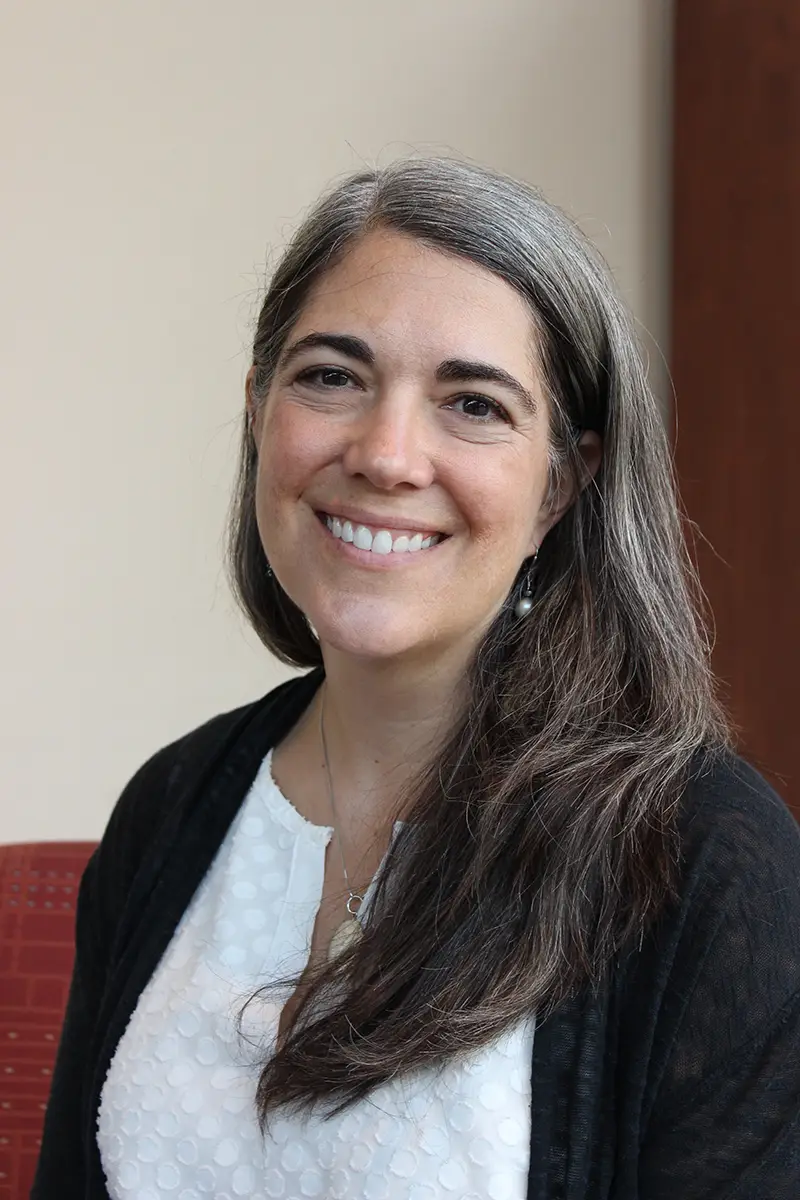
Erin Hardin
Phone
Erin E. Hardin
Professor | Interim Department Head
Key words: Counseling Psychology, Scholarship of Teaching and Learning (SoTL), vocational psychology, self construal, self-discrepancies
Education
Ph.D., The Ohio State University (2002)
Research
Research Interests
Scholarship of Teaching and Learning (SoTL), vocational psychology, self construal, self-discrepancies, workplace climate.
Research Statement
I have two areas of research interest: one focused on the Scholarship of Teaching and Learning (SoTL) and the other focused on the role of the self in well-being, broadly defined, particularly in the area of work and career. I emphasize multicultural and social justice issues across both of these domains.
In the domain of SoTL, I am particularly interested in questions relating to the training of graduate student instructors and the teaching of Introductory Psychology. In the domain of the self and well-being, I am interested in questions about the effects of how individuals see themselves in relation to others (e.g., as separate individuals or connected group members), the level of congruence between individuals’ various selves (e.g., who they are and who they want to be), and individuals’ susceptibility to messages from significant others or society about their abilities (e.g., related to the persistence of women and underrepresented minorities in STEMM (science, technology, engineering, math, and medical science) fields.
Most recently, my research and outreach work has focused on recruiting and retaining under-represented individuals in STEM, from high school to university faculty. Grounded in Social Cognitive Career Theory (SCCT; Lent, Brown, and Hackett, 1994), our interdisciplinary team is providing in-school career education interventions to ~1200 rural Appalachian high school students each year. For the past 9 years, this work has been funded by Science Education Partnership Awards (SEPA; R25 GM137365 / R25 GM129177) from the National Institutes of Health (https://ip-pipes.utk.edu/). My work has also explored the experiences of low-income rural Appalachian college students pursuing Arts & Sciences STEMM degrees and ways to support their success via mentoring and holistic support (NSF S-STEM Award 1643393).
Service Activity
Consistent with my research interests, I am active in service focused on student learning, well-being, and success and on workplace climate issues more broadly. I was a member of the APA Introductory Psychology Initiative (teacher training working group) and serve on the organizing committe for the National Institute on the Teaching of Psychology (NITOP). I also chaired a taskforce to redesign general education at UT and serve as QEP Steering Committee Lead from 2023-2025. In my role as co-PI on UTK’s NSF ADVANCE Adaptation award (Award 1760382), I helped develop workshops on social identity and bystander intervention to foster more inclusive and equitable workplace environments (see https://socialactionrt.org/utclimbs for more information about these workshops).
Honors
- Associate Editor, Journal of Career Assessment
- Editorial Board, Journal of Counseling Psychology
- Athletics Professor of Excellence, UT (2024)
- Chancellor’s Award for Distinguished Service to the University, UT (2024)
- L. R. Hesler Award for Excellence in Teaching and Service, UT (2024)
- Faculty Academic Outreach Research and Creative Activity Award, College of Arts and Sciences, UT (2022)
- Alexander Prize, UT (2020)
- Chancellor’s Award for Success in Multidisciplinary Research, UT (2020)
- Senior Excellence in Research/Creative Achievement Award, College of Arts & Sciences, UT (2018)
- James R. and Nell W. Cunningham Outstanding Teaching Award, College of Arts & Sciences, UT (2018)
- Outstanding Service Award, College of Arts & Sciences, UT (2016)
- Robert S. Daniel Teaching Excellence Award, Society for the Teaching of Psychology (Division 2 of the American Psychological Association; 2016)
- Senior Faculty Outstanding Teaching Award, College of Arts & Sciences, UT (2015)
- Excellence in Undergraduate Teaching, Department of Psychology, UT (2015)
- Graduate Education Award, Department of Psychology, UT (2013)
- President’s Excellence in Teaching Award, Texas Tech University (2012)
Grants
Current Funding
- National Institute of Health, Science Education Partnership Award (SEPA)
(R25 GM137365) Imagining Possibilities in Post-Secondary education and STEMM in Rural Appalachia 8/5/2020 – 7/31/2025, $1.8m, Co-PI - National Science Foundation (NSF) Scholarships in Science, Technology, Engineering, and Mathematics (S-STEM; Award 1643393)
Collaborative Research: ASPIRE: Appalachian Students Promoting the Integration of Research in Education
9/15/2016 – 8/31/2021 $2.8m (UTK; $4.9m combined award); Lead PI
https://aspire.utk.edu
Publications
Select PiPES/ASPIRE related publications
- Hardin, E. E., Murphy, S. M., & Gibbons, M. M. (2024). The Assessment of Post-secondary Supports: A new measure of an understudied SCCT construct. Journal of Career Development. 51(5), 598-618. https://doi.org/10.1177/08948453241280104
- Gantt, H., Cain, L., Gibbons, M. M., Thomas, C. F., Wynn, M., Johnson, B., C., & Hardin, E. E. (2024). “Knowing I had someone to turn to was a great feeling”: Mentoring rural-Appalachian STEM students. Behavioral Sciences, 14 (75). https://doi.org/10.3390/bs14010075
- Gibbons, M. M., Taylor, A. L., Brown, E., Daniels, S. K., Hardin, E. E., & Manring, S. (2019). Assessing postsecondary barriers for rural Appalachian high school students. Journal of Career Assessment. Advance online publication. DOI: 10.1177/1069072719845329
- Gibbons, M. M., Brown, E. B., Daniels, S., Rosecrance, P., Hardin, E. E., & Farrell, I. (2019). Building on strengths while addressing barriers: Career interventions in rural Appalachian communities. Journal of Career Development, 46, 637 – 650. DOI:10.1177/0894845319827652
- Gibbons, M. M., Hardin, E. E., Taylor, A. L., Brown, E. B., & Graham, D. L. (2019). Evaluation of an SCCT-based intervention to increase postsecondary awareness in rural Appalachian youth. Journal of Career Development. Advance online publication. DOI: 10.1177/0894845319832972
- Graham, D. L., Hardin, E. E., & Gibbons, M. M. (2023). Conceptualizing college-going volition in rural Appalachian high school students. Career Development Quarterly. Doi: https://doi.org/10.1002/cdq.12333
Select vocational/multicultural psychology research
- Robitschek, C., & Hardin, E. E. (2017). The future of counseling psychology research viewed through the Cultural Lens Approach. Journal of Counseling Psychology, Special Issue: The Scientific Future of Counseling Psychology, 64, 359 – 368. Doi: 10.1037/cou0000207
- Hardin, E. E., & Longhurst, M. (2016). Understanding the gender gap: Social cognitive changes during an introductory STEM course. Journal of Counseling Psychology, 63, 233-239. Doi: 10.1037/cou0000119.
- Hardin, E. E., & Donaldson, J. R., III (2014). Predicting job satisfaction: A new perspective on person-environment fit. Journal of Counseling Psychology, 61, 634 – 640. doi: 10.1037/cou0000039
- Hardin, E. E., Robitschek, C., Flores, L. Y., Navarro, R. L., & Ashton, M. W. (2014). The cultural lens approach to evaluating cultural validity of psychological theory. American Psychologist, 69, 656-668. Doi: 10.1037/a0036532
- Hardin, E. E., Leong, F. T. L., & Osipow, S. H. (2001). Cultural relativity in the conceptualization of career maturity. Journal of Vocational Behavior, 58, 36 – 52. Doi: 10.1006/jvbe.2000.1762
Select self-construal/self-discrepancies related research
- Hardin, E. E. & Larsen, J. T. (2014). Distinct sources of self-discrepancies: Effects of being who you want to be and wanting to be who you are on well-being. Emotion, 14, 214 – 226. Doi: 10.1037/a0033893
- Cross, S. E., Hardin, E. E., & Gercek-Swing, B. (2011). The what, how, why, and where of self-construal. Personality and Social Psychology Review, 15, 142 – 179. Doi: 10.1177/1088868310373752
- Hardin, E. E. & Lakin, J. (2009). The Integrated Self-discrepancy Index: A reliable and valid measure of self-discrepancies. Journal of Personality Assessment, 91, 245 – 253. Doi: 10.1080/00223890902794291
- Hardin, E. E. & Leong, F. T. L. (2005). Optimism and pessimism as mediators of the relations between self-discrepancies and distress among Asian and European Americans. Journal of Counseling Psychology, 52, 25 – 35. Doi: 10.1037/0022-0167.52.1.25
- Hardin, E. E., Leong, F. T. L., & Bhagwat, A. (2004). Factor structure of the Self-Construal Scale revisited: Implications for the multi-dimensionality of self-construal. Journal of Cross-Cultural Psychology, 35, 327 – 345. Doi: 10.1177/0022022104264125
Select SoTL publications
- Hardin, E. E., Eschman, B., Spengler, E. S., Grizzell, J. A., Moody, A. T., Ross-Sheehy, S., & Fry, K. M. (2019). What happens when trained graduate student instructors switch to an open textbook? A controlled study of the impact on student learning outcomes. Psychology Learning and Teaching, 18, 48 – 64. Doi: 10.1177/1475725718810909
- Seraphin, S. B., Grizzell, J. A., Kerr-German, A. N., Perkins, M. A., Grzanka, P. R., & Hardin, E. E. (2019). A conceptual framework for non-disposable assignments: Inspiring implementation, innovation, and research. Psychology Learning and Teaching, 18, 84 – 97. Doi: 10.1177/1475725718811711
- Jhangiani, R., & Hardin, E. E. (2015). Skill development in Introductory Psychology. Scholarship of Teaching and Learning in Psychology, 1, 362 – 376. Doi: 10.1037/stl0000049
- Hermann, A. D., Foster, D. A., & Hardin, E. E. (2010). Does the first week of class matter? A quasi-experimental investigation of student satisfaction. Teaching of Psychology, 37, 79 – 84. Doi: 10.1080/00986281003609314
- Hardin, E. E. (2007). Presentation software in the college classroom: Don’t forget the instructor. Teaching of Psychology, 34, 53 – 57. Doi: 10.1080/00986280709336652