Scholar Spotlight: Lucybel Mendez
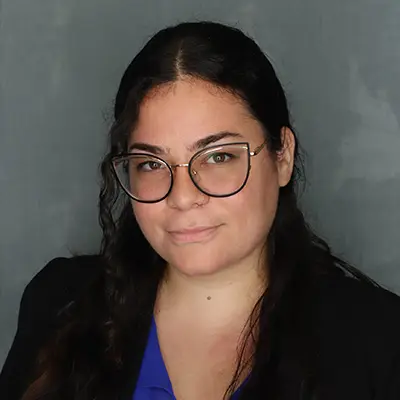

“I study what happens to young people after they experience difficult or traumatic events. I want to understand why some young people develop mental health problems or get involved in things like offending, aggression, gangs, or other risky behaviors, while others are able to cope, grow, and thrive, and what we can do to help more young people follow healthier paths.”
Lucybel Mendez
Assistant Professor
Department of Psychology and Neuroscience
My research examines how trauma and victimization shape developmental pathways toward both risk and resilience among youth and young adults.
Using a trauma-informed, socioecological approach, I examine how risk and protective factors at different levels of the social ecology influence outcomes, such as mental health and risky behaviors, with the goal of identifying processes that can inform prevention and intervention.
One of the most exciting questions in my field is why young people who experience similar adversity can follow such different developmental paths. We are increasingly moving beyond simply asking what goes wrong after trauma to understanding the processes that promote resilience and positive adaptation, and how we can use that knowledge to help young people avoid harmful outcomes and thrive.
Why I do what I do
I escaped Cuba with my family when I was 11. That experience made me aware from a very young age of how profoundly adversity can shape young people’s lives, but also of the remarkable ways that young people and families can adapt and move forward despite difficult circumstances.
That ultimately led me to ask the question that continues to drive my work today: When young people face adversity or trauma, why do some go down detrimental paths while others thrive?
Currently working on
I am developing a Youth Risk and Resilience Pathways (YR2P) study, which builds on my earlier research.
YR2P examines both positive (e.g., posttraumatic growth) and negative (e.g., dissociation) post-trauma reactions and integrates a socioecological framework to examine how individual, relational, and contextual risk and protective factors work together to shape pathways toward risk and resilience.
The study will also examine the feasibility of using ecological momentary assessment and wearable biosensors to capture these trauma-related and socioecological processes as they unfold in young people’s everyday lives.