• Request Info
  • Visit
  • Apply
  • Give
  • Request Info
  • Visit
  • Apply
  • Give

Search

A-Z Index Map

Psychology & Neuroscience

  • About Psychology & Neuroscience
    • Employment Opportunities
    • Newsletter
    • All News
    • Faculty News Archive
    • Student News Archive
  • Undergraduate Students
    • About our Majors
    • Course Descriptions
    • Community Involvement
    • Undergraduate Research
    • Advising Center
    • Study Abroad
  • Graduate Students
    • Programs
    • Admissions
    • Financial Assistance
    • Ethical & Data Availability Issues
    • Forms
    • PGSA
    • Student Appeal
  • Research
    • Neuroscience and Behavior
    • Clinical Psychology
    • Counseling Psychology
    • Cognitive and Developmental Science
    • Social Psychology
  • People
    • Faculty
    • Emeritus
    • Adjunct
    • Part-Time Clinical
    • Staff
    • Advisors
  • Psychological Clinic

The Conversation: ‘Animal behavior research is getting better at keeping observer bias from sneaking in – but there’s still room to improve’

The Conversation: ‘Animal behavior research is getting better at keeping observer bias from sneaking in – but there’s still room to improve’

The Conversation: ‘Animal behavior research is getting better at keeping observer bias from sneaking in – but there’s still room to improve’

May 6, 2024 by Logan Judy

no photo available

The Conversation: ‘Animal behavior research is getting better at keeping observer bias from sneaking in – but there’s still room to improve’

Profile
What you expect can influence what you think you see. Auscape/Universal Images Group via Getty Images

Todd M. Freeberg, University of Tennessee

Animal behavior research relies on careful observation of animals. Researchers might spend months in a jungle habitat watching tropical birds mate and raise their young. They might track the rates of physical contact in cattle herds of different densities. Or they could record the sounds whales make as they migrate through the ocean.

Animal behavior research can provide fundamental insights into the natural processes that affect ecosystems around the globe, as well as into our own human minds and behavior.

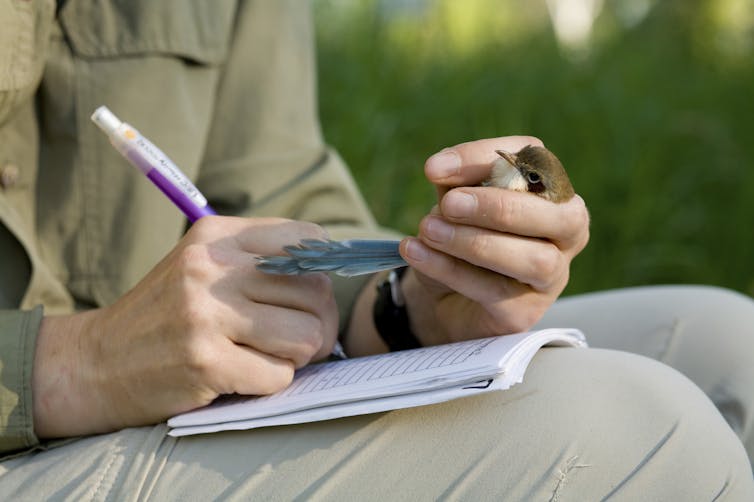
I study animal behavior – and also the research reported by scientists in my field. One of the challenges of this kind of science is making sure our own assumptions don’t influence what we think we see in animal subjects. Like all people, how scientists see the world is shaped by biases and expectations, which can affect how data is recorded and reported. For instance, scientists who live in a society with strict gender roles for women and men might interpret things they see animals doing as reflecting those same divisions.

The scientific process corrects for such mistakes over time, but scientists have quicker methods at their disposal to minimize potential observer bias. Animal behavior scientists haven’t always used these methods – but that’s changing. A new study confirms that, over the past decade, studies increasingly adhere to the rigorous best practices that can minimize potential biases in animal behavior research.

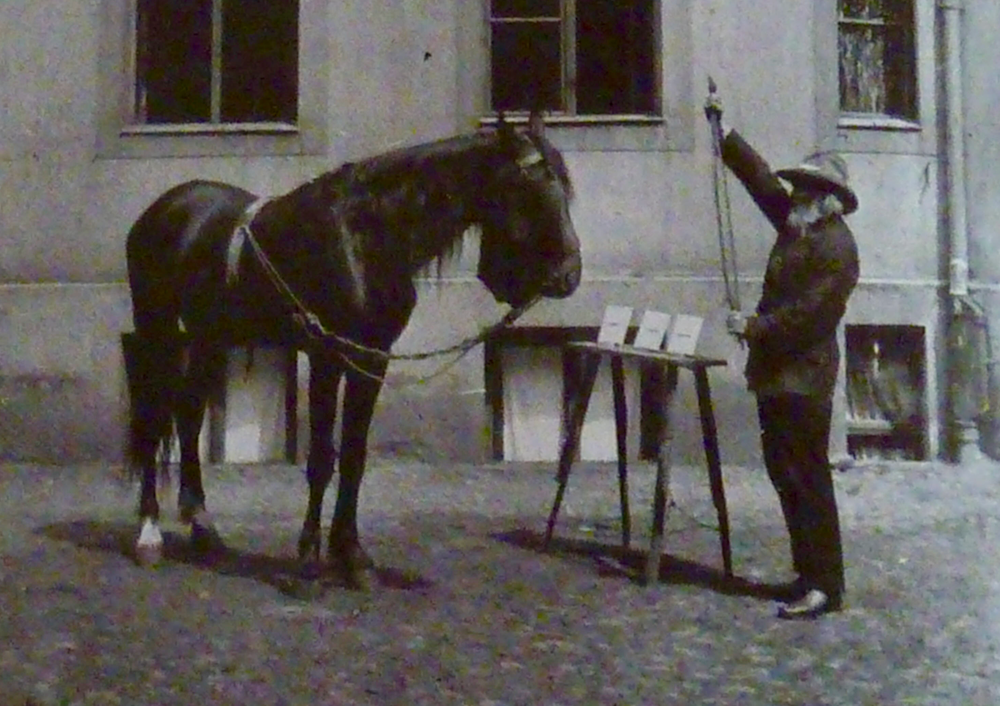
Black and white photo of a horse with a man and a small table between them displaying three upright cards.
Adding up? Karl Krall/Wikimedia Commons

Biases and self-fulfilling prophecies

A German horse named Clever Hans is widely known in the history of animal behavior as a classic example of unconscious bias leading to a false result.

Around the turn of the 20th century, Clever Hans was purported to be able to do math. For example, in response to his owner’s prompt “3 + 5,” Clever Hans would tap his hoof eight times. His owner would then reward him with his favorite vegetables. Initial observers reported that the horse’s abilities were legitimate and that his owner was not being deceptive.

However, careful analysis by a young scientist named Oskar Pfungst revealed that if the horse could not see his owner, he couldn’t answer correctly. So while Clever Hans was not good at math, he was incredibly good at observing his owner’s subtle and unconscious cues that gave the math answers away.

In the 1960s, researchers asked human study participants to code the learning ability of rats. Participants were told their rats had been artificially selected over many generations to be either “bright” or “dull” learners. Over several weeks, the participants ran their rats through eight different learning experiments.

In seven out of the eight experiments, the human participants ranked the “bright” rats as being better learners than the “dull” rats when, in reality, the researchers had randomly picked rats from their breeding colony. Bias led the human participants to see what they thought they should see.

Eliminating bias

Given the clear potential for human biases to skew scientific results, textbooks on animal behavior research methods from the 1980s onward have implored researchers to verify their work using at least one of two commonsense methods.

One is making sure the researcher observing the behavior does not know if the subject comes from one study group or the other. For example, a researcher would measure a cricket’s behavior without knowing if it came from the experimental or control group.

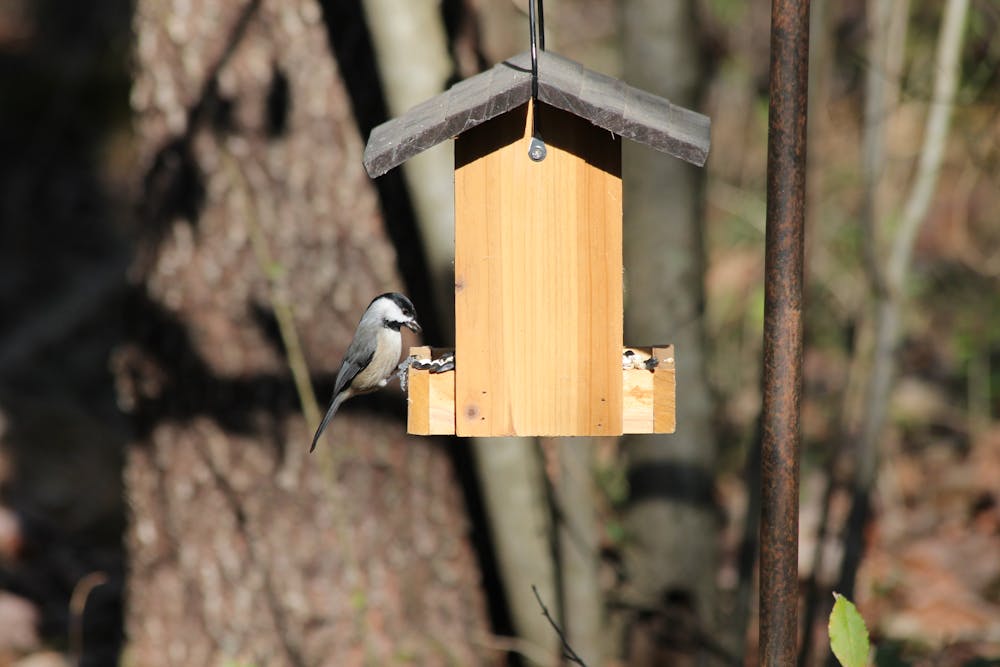
The other best practice is utilizing a second researcher, who has fresh eyes and no knowledge of the data, to observe the behavior and code the data. For example, while analyzing a video file, I count chickadees taking seeds from a feeder 15 times. Later, a second independent observer counts the same number.

Yet these methods to minimize possible biases are often not employed by researchers in animal behavior, perhaps because these best practices take more time and effort.

In 2012, my colleagues and I reviewed nearly 1,000 articles published in five leading animal behavior journals between 1970 and 2010 to see how many reported these methods to minimize potential bias. Less than 10% did so. By contrast, the journal Infancy, which focuses on human infant behavior, was far more rigorous: Over 80% of its articles reported using methods to avoid bias.

It’s a problem not just confined to my field. A 2015 review of published articles in the life sciences found that blind protocols are uncommon. It also found that studies using blind methods detected smaller differences between the key groups being observed compared to studies that didn’t use blind methods, suggesting potential biases led to more notable results.

In the years after we published our article, it was cited regularly and we wondered if there had been any improvement in the field. So, we recently reviewed 40 articles from each of the same five journals for the year 2020.

We found the rate of papers that reported controlling for bias improved in all five journals, from under 10% in our 2012 article to just over 50% in our new review. These rates of reporting still lag behind the journal Infancy, however, which was 95% in 2020.

All in all, things are looking up, but the animal behavior field can still do better. Practically, with increasingly more portable and affordable audio and video recording technology, it’s getting easier to carry out methods that minimize potential biases. The more the field of animal behavior sticks with these best practices, the stronger the foundation of knowledge and public trust in this science will become.

Todd M. Freeberg, Professor and Associate Head of Psychology, University of Tennessee

This article is republished from The Conversation under a Creative Commons license. Read the original article.
Filed Under: Faculty, Faculty News

Psychology Faculty Honored with Awards for Diversity Leadership, Advising, Teaching, and Research Excellence

Psychology Faculty Honored with Awards for Diversity Leadership, Advising, Teaching, and Research Excellence

March 27, 2024 by Logan Judy

no photo available

Psychology Faculty Honored with Awards for Diversity Leadership, Advising, Teaching, and Research Excellence

Profile

During the 2023 College of Arts and Sciences Faculty Convocation, several faculty in the Department of Psychology and Neuroscience were honored for excellence in teaching, advising, research, and outreach. 

Kalynn Schulz, Assistant Professor

Diversity Leadership Award

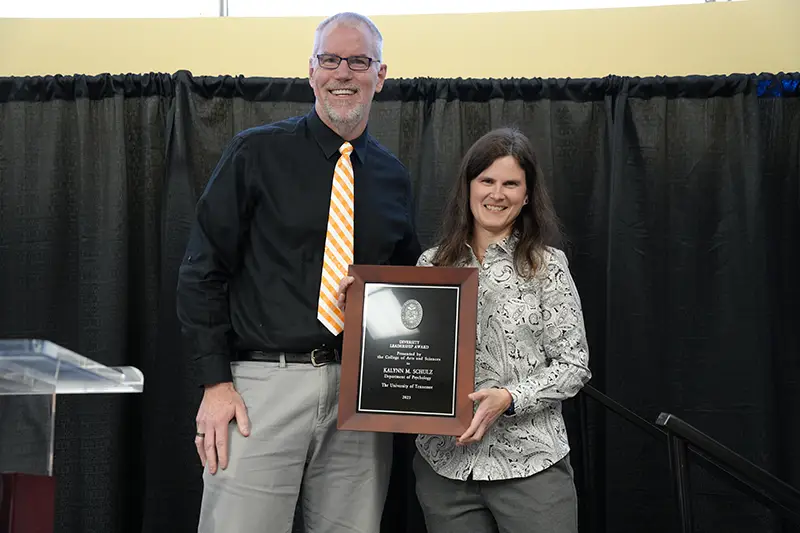
Kalynn Schulz is presented with the Diversity Leadership Award by Todd Moore at the 2023 Faculty Awards Convocation

Schulz is a remarkable scholar and educator whose actions on campus, regionally, and nationally, demonstrate an unwavering commitment to increasing academic representation of and support for scholars from historically marginalized groups.

Schulz’s diversity leadership is perhaps best exemplified by her developing and launching a pilot, cross-institutional research training program between the psychology departments at UT Knoxville and the historically Black university Tennessee State University called STARS (Scholarly Trainees Acquiring Research Skills). The program was designed to prepare TSU students for graduate-level research in psychology and support their transition into graduate school.

Schulz energized department-wide involvement of faculty and graduate students as research mentors, academic coaches, and peer mentors. TSU students from the first cohort are now thriving in graduate school.


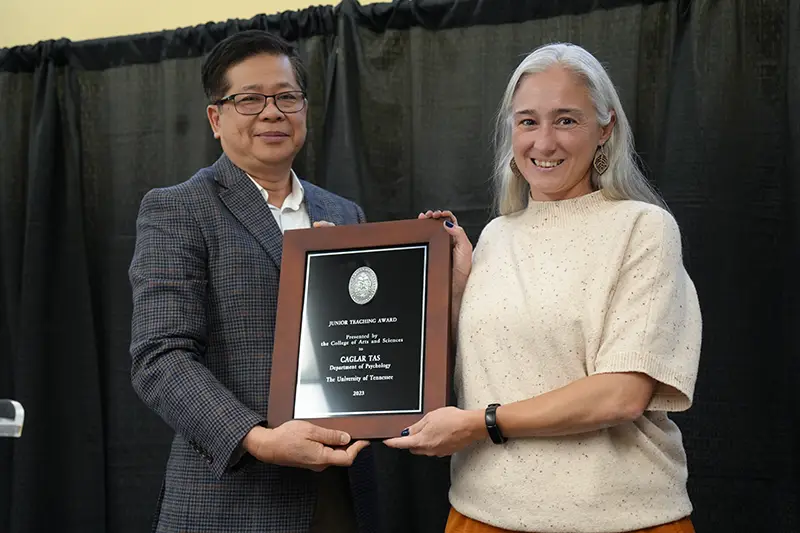
Caglar Tas, Assistant Professor 

Excellence in Teaching Awards: Junior

Caglar Tas is presented with an award by Liem Tran at the 2023 Faculty Awards Convocation

Tas is an outstanding teacher and mentor who cares deeply about her students’ learning. She has taught courses at the undergraduate and graduate level, largely focused on research methods, which are some of the most difficult courses for psychology majors.

Tas demonstrates remarkable skill in engaging students and providing opportunities to apply the material learned in her courses. She encourages students to ask questions and actively participate in discussions. Students in her courses describe her as “an amazing professor,” “always accessible,” and “incredibly knowledgeable.” In addition to the courses she teaches, Tas is an extremely sought-after mentor at the undergraduate and graduate levels. Her incredible passion about teaching and mentoring truly energizes her students.


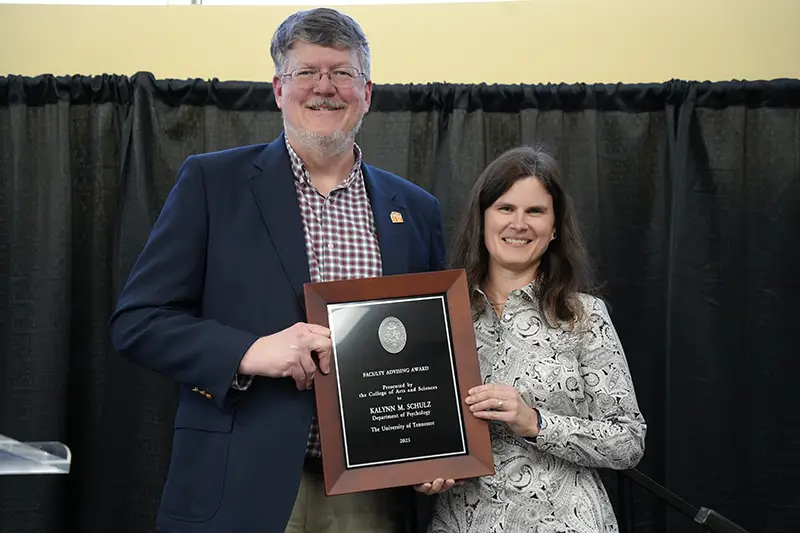
Kalynn Schulz, Assistant Professor

Faculty Advising Service Awards

Kalynn Schulz is presented with an award by Chuck Collins at the 2023 Faculty Awards Convocation

Schulz exemplifies our college’s commitment to outstanding advising, implementing proactive and developmental advising models to build positive working relationships with students in support of their academic and career goals. Schulz is committed to supporting all students, and especially under-represented minority students. Students consistently express gratitude for her care and concern for their personal well-being in course evaluations.

One student noted, “Schulz thinks of the students who tend to be shy and embarrassed to ask questions in class and the students who may not be doing well and openly offers her most undivided attention and support to assure us that she will always be there to help. Schulz is more than a professor, teacher, instructor—she is a life mentor and an inspiration.” 


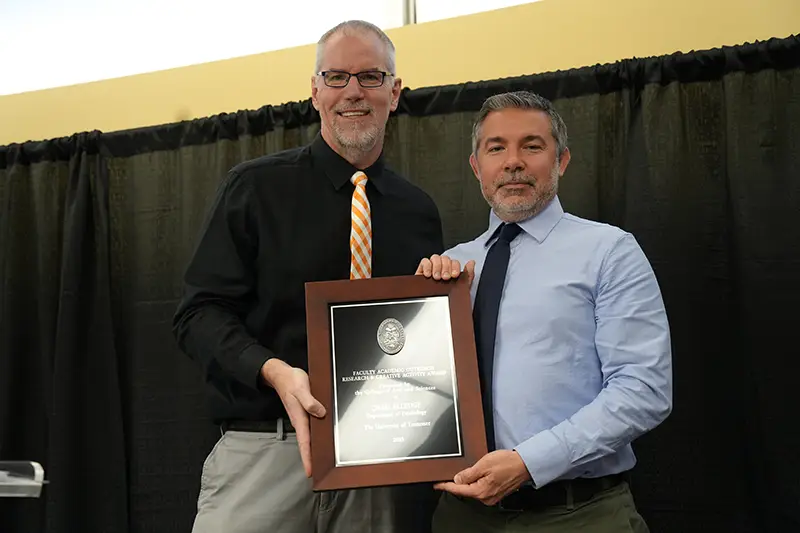
Chris Elledge, Associate Professor

Faculty Academic Outreach Award: Research & Creative Activity

Chris Elledge is presented with an award by Todd Moore at the 2023 Faculty Awards Convocation

Elledge’s research program is focused on bullied, socially marginalized, and anxious youth in the Knoxville community. He is a highly valued and accomplished associate professor and associate director of clinical training for the clinical psychology PhD program in the Department of Psychology and Neuroscience. Elledge has particular interest in developing school-based interventions that can promote or enrich the peer relationships of at-risk youth. 

His commitment to serving children and families in the Knoxville community is exceptionally impressive. His Recess VOLs program pairs at-risk children with UT student mentors who visit children twice weekly for two academic semesters. The program has placed approximately 450 UT students with children across 10 Knox County elementary schools, serving approximately 300 youth.


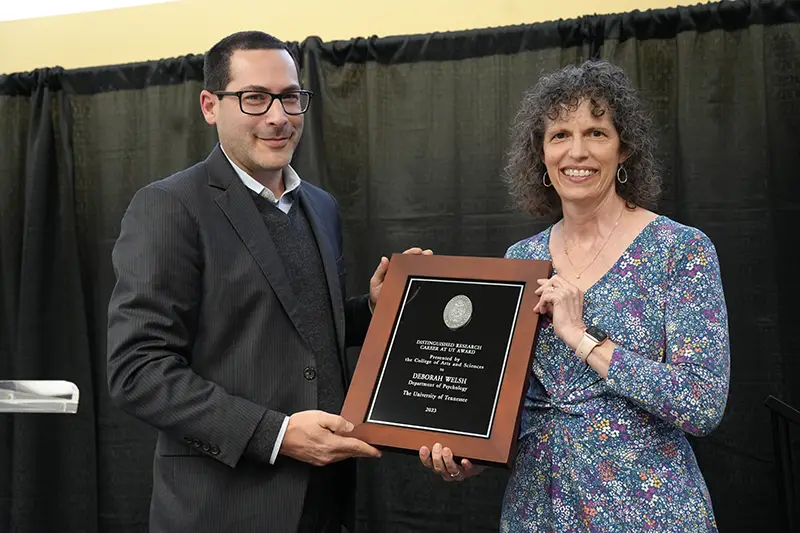
Deborah Welsh, Professor 

Distinguished Research Career at UT

Deborah Welsh is presented with an award by Michael Blum at the 2023 Faculty Awards Convocation

Deborah Welsh has been a faculty member in psychology at UT for more than 30 years and has an exceptional record of research scholarship and student research mentorship. Her research program has focused on understanding adolescent and emerging adults’ romantic relationships and their impact on functioning and has been funded by multi-year research grants from the National Institutes of Health.

Even while serving for 10 years as head of the psychology department, Welsh remained research active. She is passionate about research mentoring of undergraduate and graduate students. Her mentees have had successful careers and received elite postdoctoral fellowships and national awards. In recognition of her research accomplishments, Welsh has received numerous awards from UT Knoxville, including most recently a Chancellor’s Professorship, the 2023 College of Arts and Sciences College Marshal, and the 2023 Extraordinary Service to the University Award. 


Filed Under: Faculty News, Featured

Lamer and Team Read the Room for Angry Crowd Bias

Lamer and Team Read the Room for Angry Crowd Bias

February 27, 2024 by Logan Judy

no photo available

Lamer and Team Read the Room for Angry Crowd Bias

Profile

Sarah Lamer’s research into the psychology of social biases found favor with an international audience this year, earning her a spot on the Association for Psychological Science (APS) roster of Rising Stars for 2024.

The APS is the leading international organization dedicated to advancing scientific psychology across disciplinary and geographic borders. Lamer, assistant professor in the UT Department of Psychology and Neuroscience, is proud to be recognized among the top early-career colleagues in her field.

“This acknowledges the importance and rigor of my scientific work as well as the intensive mentorship model I take in my lab,” said Lamer. She works alongside her graduate students Darla Bonagura and Gillian Preston in her Social Perception and Cognition (SPĀC) lab.

“I work closely with my skilled team of graduate and undergraduate mentees to explore important and timely questions about why bias exists, where it originates, and why it is so fluently perpetuated,” she said. “This accolade recognizes the important work that we do as we discover answers to these critical questions.”

One of her research projects, “The Angry Crowd Bias: Social, Cognitive, and Perceptual Mechanisms,” is supported by a National Science Foundation grant that enables her to design, analyze, and conduct studies; mentor graduate students through the research process; share their work at professional conferences; and conduct workshops to share a love of science with students in the local Knoxville community.

The angry crowd bias is a psychological phenomenon people can experience when first exposed to faces that are hard to see or that have subtle expressions—notably among a “many faces in a crowd” situation. People can report that these faces look threatening, even when they are not.

“We know from a bulk of research that people are able to detect average information about a crowd with some accuracy,” said Lamer. “But perception is more complex than that. Accuracy and bias always work together in human perception.”

Lamer and her team hypothesized that this complex mix causes a tendency to perceive an unfamiliar crowd’s mood to be potentially dangerous.

“We focused on anger bias since crowds can pose a stronger threat to safety than an individual,” she said. “If a crowd is angry at you, you are at much higher risk than if an individual is angry at you. In other words, it is functional to be wary of a crowd.”

The team uses state-of-the-art methods and statistical tools to examine a viewer’s visual attention to faces—eye-tracking data, signal-detection methods, and drift-diffusion modeling—to track what people focus on while making emotional judgments. Then they assess what is accurate and what leads to bias.

“The approach makes it possible to track visual patterns—for example, which faces people look at first in a crowd, how long they look at each face, and whether they ignore anyone,” said Lamer. “All of which are likely to be affected by the race and gender of the faces themselves.”

This work is timely in relation to widespread protests in the US over the past several years and the divergent interpretations these crowds have received across public perception—potentially due in part to the racial and gender makeup of these assemblies.

“With this social backdrop in mind—and understanding that, according to event-forecasting models, social unrest is likely to increase in the future—this research was designed to identify the people whom negative crowd biases are most likely to affect, where these biased judgments come from, and how malleable they might be,” said Lamer. “We plan to complete data analysis on our current study by the end of the semester.”

Filed Under: Faculty News, Featured

Garriy Shteynberg Published in ‘The Conversation’

Garriy Shteynberg Published in ‘The Conversation’

January 26, 2024 by Logan Judy

no photo available

Garriy Shteynberg Published in ‘The Conversation’

Profile

‘Collective mind’ bridges societal divides − psychology research explores how watching the same thing can bring people together

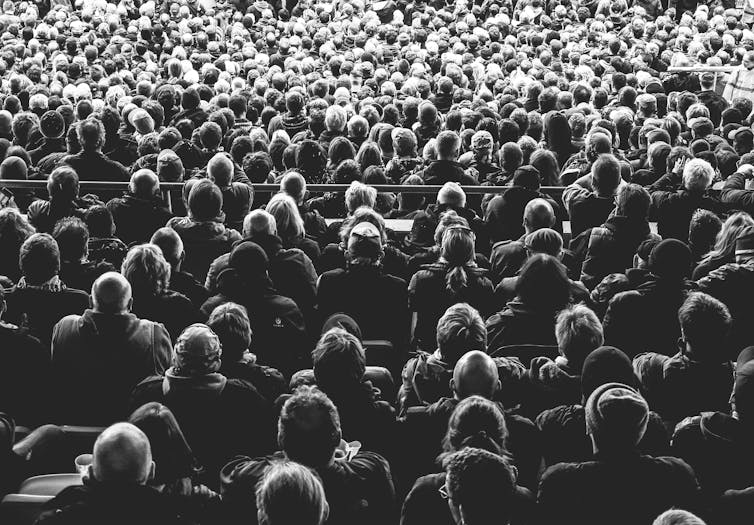
black and white photo of a crowd
Paying attention to the same thing strengthens bonds between observers. Carlos David Gomez/Wikimedia Commons, CC BY-SA
Garriy Shteynberg, University of Tennessee

Only about 1 in 4 Americans said that they had trust in the nation’s institutions in 2023 – with big business (1 in 7), television news (1 in 7) and Congress (1 in 12) scraping the very bottom.

While institutional trust is decreasing, political polarization is increasing. The majority of Republicans (72%) and Democrats (64%) think of each other as more immoral than other Americans – a nearly 30% rise from 2016 to 2022. When compared with similar democracies, the United States has exhibited the largest increase in animus toward the opposing political party over the past 40 years.

When public trust and political consensus disappear, what remains? This question has occupied my research for the past 20 years, both as a scholar trained in social anthropology, organizational science and social cognition and as a professor of psychology.

Researchers don’t have all the answers, but it seems that even in the absence of public trust and agreement, people can share experiences. Whether watching a spelling bee or a football game, “we” still exist if “we” can witness it together.

My colleagues and I call this human capacity to take a collective perspective theory of collective mind. The foundation of collective mind, and what we study in the lab, is shared attention, instances when people experience the world with others.

Shared attention amplifies experiences

Experiments in the laboratory with adults show that shared experiences amplify psychological and behavioral reactions to the world.

My colleagues and I find that compared with attending to the world alone, or at different times than others, synchronous attention with others yields stronger memories, deeper emotions and firmer motivations. Studies show that seeing words together renders them more memorable, watching sad movies together makes them sadder, and focusing together on shared goals increases efforts toward their pursuit. Sharing attention to the behavior of others yields more imitation of that behavior.

Critically, those experiencing something with you need not be physically present. Although in some experiments participants sit side by side, in other studies participants believe they are attending together from different lab rooms or even across the nation. Irrespective of the location, the sense that “we are attending” to something together at the same time – as compared with in solitude or on your own schedule – amplifies the experience.

Laboratories in the United States, Australia, Hungary, Germany and Denmark have found similar results. Notably, some studies have found that people want to have more shared experiences, even when they don’t actually enjoy them more than solitary experiences.

What’s behind these observations? As a social species that survives through joint action, human beings in general need a common baseline from which to act. When shared experiences amplify what we know together, it can guide subsequent behavior, rendering that behavior more understandable and useful to the collective.

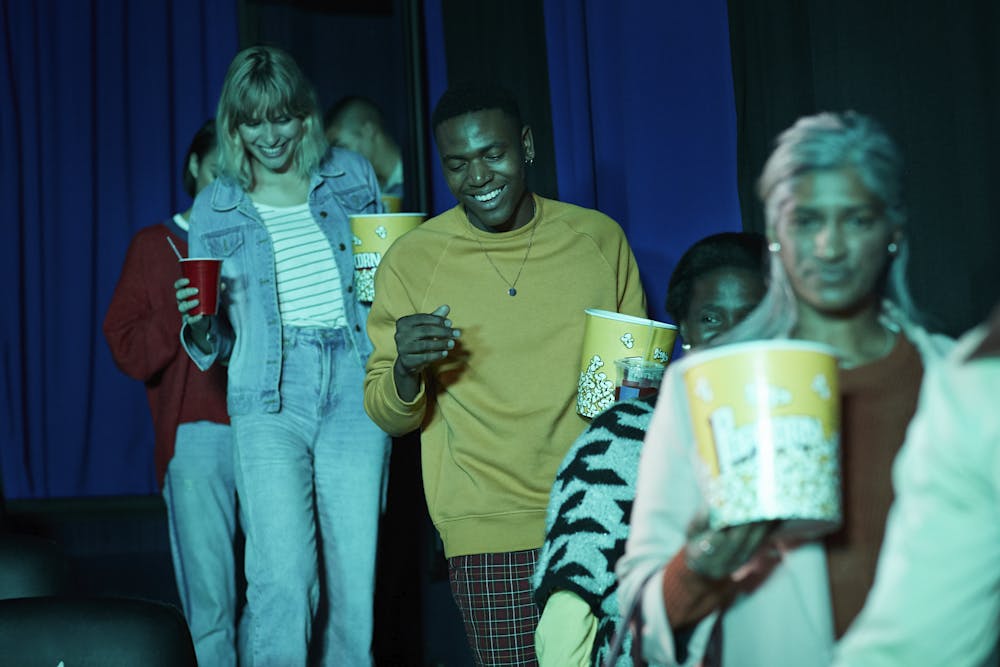
people with refreshments walking into a dim movie theater
Whether you came together or just happened to attend the same screening, a shared experience like watching a movie can help you sense a shared mind. Klaus Vedfelt/DigitalVision via Getty Images

Sharing attention builds relationships

Shared attention happens within the bounds of our cherished relationships and groups, like when friends go to a movie together, but also outside of them.

Research suggests that shared attention on a common subjective experience can build relationships across the political divide and strengthen cooperation among strangers. For instance, when people co-witness that they have the same gut reaction to an unfamiliar piece of music or a meaningless inkblot, they like each other more, even if they have opposing political leanings. Critically, relational benefits are more likely when such subjective experiences are shared simultaneously – instances when people are most likely to sense a shared mind.

People can be attending next to one another or thousands of miles apart, in groups of two or 200, and the results are the same – shared attention amplifies experiences, creates social bonds and even synchronizes individuals’ heartbeats and breaths.

Scientists studying kids find that interest in attending with others begins in the first year of human life, predating the development of language and preceding any notion of shared beliefs by several years. Human relationships don’t begin with sharing values; sharing attention comes first.

The role of shared attention in society

Before the advent of the internet, Americans shared attention broadly – they watched the same nightly news together, even if they did not always agree whether it was good or bad. Today, with people’s attention divided into media silos, there are more obstacles than ever to sharing attention with those with whom you disagree.

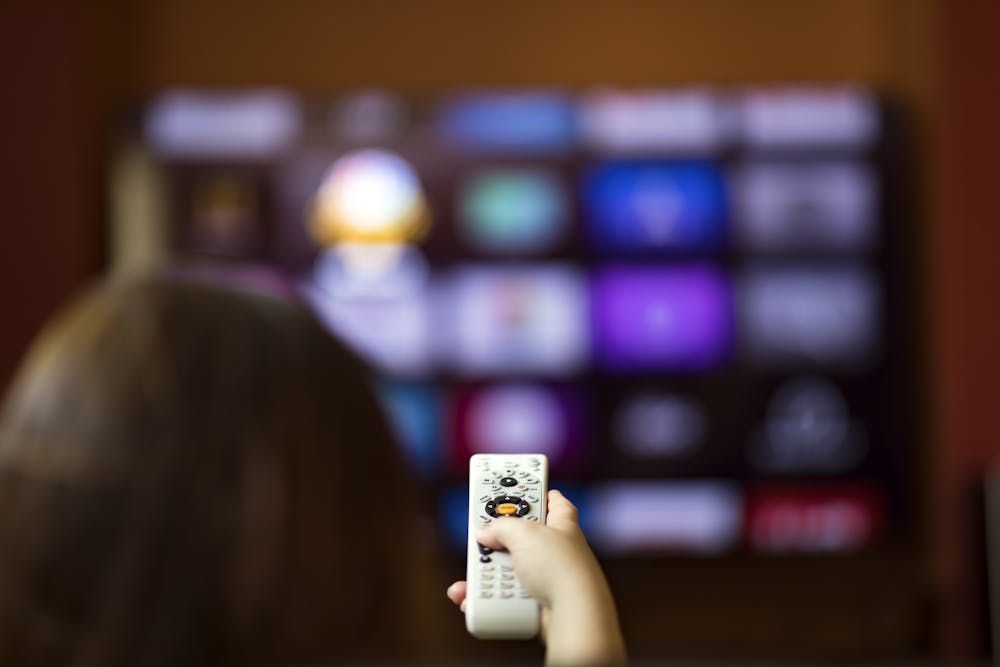
hand holding remote points at TV with many blurry app icons
How siloed is the media diet you consume? MariuszBlach/iStock via Getty Images Plus

And yet, even when we can no longer agree on what “we” believe, sharing attention to the basic sights and sounds of our world connects us. These moments can be relatively small, like watching a movie in the theater, or large, like watching the Super Bowl. However, remembering that we are sharing such experiences with Americans of all political persuasions is important.

Consider the Federal Communications Commission’s fairness doctrine, a policy that controversial issues of public importance should receive balanced coverage, exposing audiences to differing views. In effect, it created episodes of shared attention across social, political and economic differences.

Institutional trust is now almost twofold lower than it was in 1987, the year the fairness doctrine was repealed. It is possible that the end of the fairness doctrine helped create a hyperpolarized media, where the norm is sharing attention with those who are ideologically similar.

Of course, sharing attention on divisive issues can be painful. Yet, I believe it may also push us beyond our national fracture and toward a revitalization of public trust.

Why? When we share awareness of the world with others, no matter how distinct our beliefs, we form a community of minds. We are no longer alone. If we are to restore public trust and national ideals, sharing attention across societal divides looks like a way forward.The Conversation

Garriy Shteynberg, Associate Professor of Psychology, University of Tennessee

This article is republished from The Conversation under a Creative Commons license. Read the original article.
Filed Under: Faculty News, Featured

Szymanski Nurtures Collaborative Success as Editor for Psychology of Women Quarterly

Szymanski Nurtures Collaborative Success as Editor for Psychology of Women Quarterly

December 14, 2023 by Logan Judy

no photo available

Szymanski Nurtures Collaborative Success as Editor for Psychology of Women Quarterly

Profile

Department of Psychology and Neuroscience Professor Dawn Szymanski’s decades of research on multicultural feminist issues in relation to psychological health made her an excellent choice to be editor of Psychology of Women Quarterly (PWQ), a top journal of women’s studies, a role she took on in 2020 and concludes in 2024.

The feminist, scientific, peer-reviewed journal specializes in empirical research, critical reviews, and theoretical articles that advance the field of psychology of women and gender. Szymanski’s top priority as editor was to preserve the integrity and high quality of studies published in the journal.

“PWQ has earned a reputation for scholarly excellence and for publishing studies that are novel, cutting edge, rigorous, and sophisticated, for making important contributions to the existing literature, and addressing major social issues,” said Szymanski. “I focused on promoting visibility, diversity, timely and educative reviews, feminist mentoring, appreciating all those who contribute to PWQ, and recognizing excellence.”

Her approach worked to maintain and even strengthen PWQ’s position as the leading venue for feminist psychological science, and was much appreciated by colleagues.

“Authors reported incredible feedback from Szymanski and her team that enhanced their scholarship through rigorous peer review and editorial collaboration, which is a hallmark of a strong editorial process,” said Patrick Grzanka, professor of psychology and divisional dean of social sciences, College of Arts and Sciences. “Szymanski also gave substantial space in the journal toward special issues on emerging and pertinent topics across the field, including open science and reproductive justice.”

“We published two special Issues, one on Feminist Psychology and Open Science: Challenges and Opportunities (December, 2021) and the other on Reproductive Justice: Advancing Science, Advocacy, and Practice (December, 2023),” said Szymanski. “We continued to lift the voices of those who are underrepresented in our literature by publishing several articles on the experiences of multiply minoritized women—e.g., African American women, Latine and Black sexual minority, gender expansive women, and South Asian women.”

She also collaborated with the American Psychological Association Division 35 leadership to establish a yearly Excellence in Peer Review Award that recognizes the time-consuming, labor intensive, and often under-appreciated service commitment of providing quality peer reviews.

This multifaceted work strengthened not only the PWQ brand, but shone a light on the high quality of UT scholarship in psychology.

“Szymanski’s stewardship of PWQ here at UT deepened recognition across the discipline of psychology that we are a leading institution for critical feminist research,” said Grzanka. “This is a tremendous accomplishment for her as a scholar and a source of pride for our college and university.”

Szymanski credits her editorship experience with enhancing her insight for research, writing, leadership, mentoring, managing a large team, and the editorial and production process. 

“It is exciting to work with, and learn from, the best and brightest researchers in feminist psychology and to help shape the future of feminist psychological science,” she said. “It has influenced how I carry out the variety of roles I play as a professor.”

As she hands off the leadership of PWQ, Szymanski welcomes the ability to spend more time in those roles, including conducting her own research and guiding the investigations of her doctoral students. Their projects seek to improve psychological well-being for women and other minoritized groups working through a spectrum of difficult situations.

“Some of our recent, in the works, and future research efforts include examining experiences of sexual objectification in one’s family of origin, the relation between involvement in LGBTQ activism and positive psychological functioning, the sexual well-being of sexual assault survivors, and experiences of minoritized graduate student researchers and therapists,” she said.

Szymanski’s successful tenure for PWQ and her continued championing of these voices impacts the psychological health of Volunteers at home and around the world.

Filed Under: Faculty News, Featured

Freeberg Co-Edited Issue of Philosophical Transactions of the Royal Society of London

Freeberg Co-Edited Issue of Philosophical Transactions of the Royal Society of London

May 1, 2023 by psychweb

no photo available

Freeberg Co-Edited Issue of Philosophical Transactions of the Royal Society of London

Profile

Todd Freeberg, professor of psychology, co-edited a special issue of Philosophical Transactions of the Royal Society of London, the oldest continually running science journal in the world. 

The special issue is on the behavior and ecology of mixed-species animal groups and involves contributions from Freeberg and two former students: Brittany Coppinger (PhD, psychology, ’21) and Shannon Eppert (BS, EEB, ’16). 

“It is surprising to most people, but mixed-species groups are common throughout the world,” Freeberg said. “Even though these groups have been studied for decades, articles on the topic have traditionally been published in species-specific journals.”

This special issue brings together researchers with approaches ranging from comparative psychology to community ecology and study subjects including insects, fish, birds, and mammals. Greater focus on mixed-species groups will increase our knowledge of behavioral and ecological processes influencing individuals.

Browse the special issue online here.

Filed Under: Faculty News

Freeberg Publishes Piece in The Conversation

Freeberg Publishes Piece in The Conversation

April 15, 2023 by psychweb

no photo available

Freeberg Publishes Piece in The Conversation

Profile

Chickadees, titmice and nuthatches flocking together benefit from a diversity bonus – so do other animals, including humans

Filed Under: Faculty News

Reynolds Receives NSF Funding for Research

Reynolds Receives NSF Funding for Research

April 1, 2023 by psychweb

no photo available

Reynolds Receives NSF Funding for Research

Profile

Greg Reynolds received a National Science Foundation research grant, along with his co-PIs Lorraine Bahrick and Robert Lickliter from Florida International University, for their project “Selective Attention and Intersensory Processing in Infancy.”  The total grant is $700,000. 

Project Summary

How do infants make sense of the world around them? This project examines the possibility that infant attention is initially drawn to the intersensory redundancy that occurs when the same information is perceived through more than one sensory system. An example of intersensory redundancy is the information common to the movements of the face and sounds of the voice of a person speaking. Multiple measures will be used to determine: (1) whether infants pay attention to information provided by intersensory redundancy before paying attention to other types of information, (2) whether intersensory redundancy helps infants process information more efficiently, and (3) areas of the brain involved in intersensory processing in infancy. Answering these questions will provide insight into how infants learn from caregivers. This project will have broader impacts through training graduate and undergraduate students in cognitive neuroscience, which will increase the participation of underrepresented groups in STEM fields. Findings may also contribute to understanding deficits children with disabilities experience processing audiovisual speech. 

This project has three major aims that will be addressed in a series of experiments on 5- and 10-month-old infants. Aim 1 examines how intersensory redundancy affects infants’ attention and learning from audiovisual speech, using simultaneous measures of heart rate changes associated with attention and electroencephalogram (EEG) measures of attention and memory. Aim 2 examines whether infants’ attention can be biased toward or away from intersensory redundancy by providing specific types of information during initial learning prior to EEG testing. Aim 3 is to determine which areas of the brain are involved in intersensory processing of audiovisual speech in infancy, using computational modeling of EEG data. Infants are expected to show enhanced brain activity to redundant information provided by audiovisual speech, and areas of prefrontal cortex are expected to be involved in processing intersensory redundancy in infancy.

Filed Under: Faculty News

Todd Freeberg Published in ‘The Conversation’

Todd Freeberg Published in ‘The Conversation’

February 7, 2023 by Logan Judy

no photo available

Todd Freeberg Published in ‘The Conversation’

Profile

Chickadees, titmice and nuthatches flocking together benefit from a diversity bonus – so do other animals, including humans

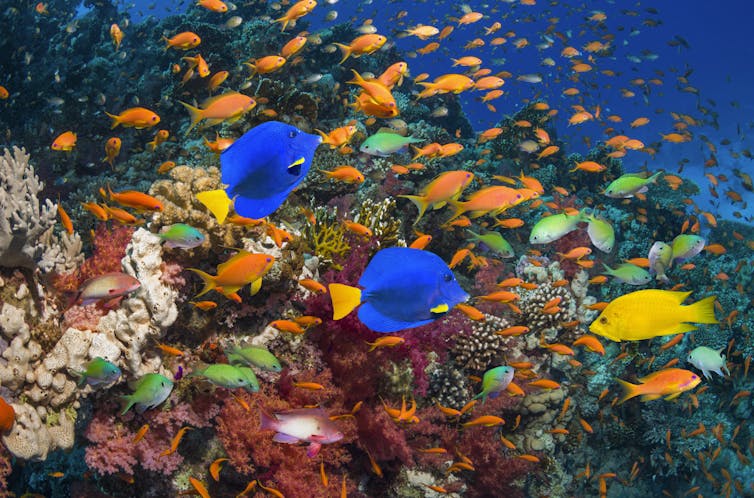
More watchful eyes can mean more safety for all. Georgette Douwma/Stone via Getty Images
Todd M. Freeberg, University of Tennessee

Carolina chickadees are small, boisterous year-round residents of the southeastern United States. They are regularly found with much larger tufted titmice, white-breasted nuthatches and various woodpecker species.

In these mixed flocks, chickadees are almost always the subordinate individuals, outcompeted by their larger flockmates. Why, then, do chickadees regularly join these flocks? Might they have a symbiotic relationship with other species in these flocks?

I study animal behavior and am especially interested in testing how diverse groups of animals sometimes outperform uniform groups made up of a single species.

One potential explanation for why chickadees – or any species, for that matter – might join a mixed-species group is that such groups may possess a wider variety of cognitive tools, resulting in increased creativity and innovation for the group as a whole.

More is more

One of the first experiments to demonstrate the benefits of diversity involved honeybees and their ability to maintain optimal hive temperature, which is crucial to egg and larval development.

Scientists manipulated the surrounding temperature of bee colonies that varied in their genetic relatedness. Some colonies had only a single male that mated with the queen, while others had multiple males that mated with the queen. The more genetically diverse colonies were better at maintaining hive temperatures than the genetically alike colonies.

The benefits of diversity within a species appear to extend to mixed-species groups as well.

Scientists have shown that Caribbean zenaida doves benefit by being in groups with Carib grackles, a species of blackbird. Zenaida doves do not have alarm calls of their own but respond to the alarm calls of grackles with increased vigilance. Carib grackles, in turn, may gain foraging benefits from interactions with zenaida doves by copying their foraging behavior and movements.

Similarly, Diana monkeys and Campbell’s monkeys in Côte d’Ivoire regularly join up in mixed-species groups. When this occurs, both species are freed up by the greater number of eyes and ears scanning for trouble, enabling them to focus on other tasks. Diana monkeys forage more in mixed-species groups than when they are alone and Campbell’s monkeys move and call more than when they are alone.

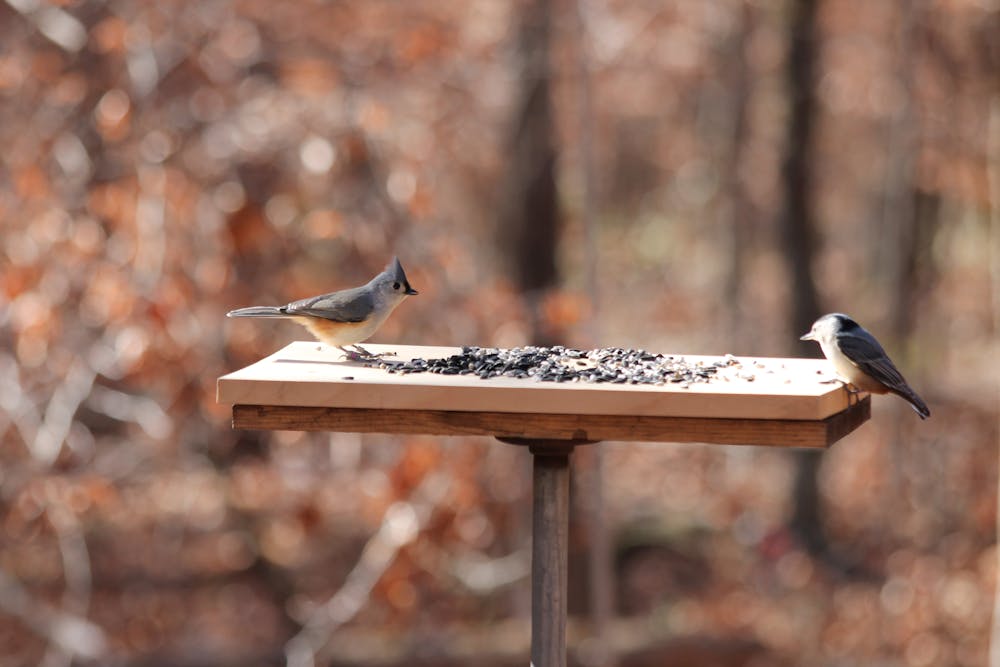
Two different birds at either end of a flat wooden platform with seeds on it situated in the woods.
Tufted titmouse, left, and white-breasted nuthatch eat from our platform feeder. Todd M. Freeberg, CC BY-ND

Birds of different feathers also flock together

My colleagues and I found similar results in our research on Carolina chickadees. These birds are often found in flocks with tufted titmice and white-breasted nuthatches, as well as a handful of other occasional species. We have been studying these flocks for two decades using simple platform feeders as a starting point. Once we found that a flock was using our platform feeder, we cleared the seeds and put them in a hopper-style feeder the birds had never seen before.

A bird eats a seed from a rectangular box shaped feeder with a slanted roof and feeding troughs.
A Carolina chickadee enjoys food from an unfamiliar feeder. Todd M. Freeberg, CC BY-ND

We found chickadees in flocks with titmice and nuthatches were more likely to figure out the feeder than chickadees in less diverse flocks. Titmice in diverse flocks were also more likely to solve the task than titmice in less diverse flocks. It’s possible, with more eyes and ears to perceive potential threats, individuals can spend less time patrolling for predators and more time problem-solving.

Other research on flocks of chickadees, titmice and nuthatches has supported this idea. When a predator is detected by these birds, they actively mob it in an effort to drive it from the area. Titmice tend to hang back and let the chickadees and nuthatches do the majority of the work, however, so it seems likely that titmice, in particular, benefit from the defensive behavior of the other two species in these flocks. Ongoing work is trying to determine whether titmice are freeloaders in these flocks – or if they are providing anti-predator or food-finding benefits.

Human diversity

The benefits-of-diversity idea has also been studied in people. Multiple experiments reveal that not only do groups make better decisions than individuals, more-diverse groups make better decisions than less-diverse groups.

In an experimental study of simulated marketplace decisions, teams of diverse individuals were better able to judge the true market value of commodities than homogeneous teams, in both southeast Asian and North American populations. In another study, juries of diverse individuals weighed relevant evidence more carefully and deliberated more effectively than homogeneous juries. Similar benefits of diversity are regularly observed in business and educational settings.

Scientists increasingly know there is strength in diversity – not just for bees and birds but for our own species, as well.The Conversation

Todd M. Freeberg, Professor and Associate Head of Psychology, University of Tennessee

This article is republished from The Conversation under a Creative Commons license. Read the original article.
Filed Under: Faculty News, Featured

  • « Previous Page
  • 1
  • 2

Recent Posts

  • Burghardt Honored with Herpetology Award
  • Survivor Support: Getting Language Right
  • Students, Faculty, and Alumni Making an Impact
  • Connell Dedicated to Student-centered Learning
  • Welsh’s Legacy Honored with New Scholarship

Recent Comments

No comments to show.

College of Arts & Sciences

117 Natalie L. Haslam Music Center
1741 Volunteer Blvd.
Knoxville TN 37996-2600

Phone: 865-974-3241

Archives

  • August 2026
  • May 2026
  • March 2026
  • October 2025
  • September 2025
  • July 2025
  • June 2025
  • April 2025
  • January 2025
  • December 2024
  • November 2024
  • October 2024
  • August 2024
  • July 2024
  • May 2024
  • March 2024
  • February 2024
  • January 2024
  • December 2023
  • July 2023
  • May 2023
  • April 2023
  • February 2023

Categories

  • Faculty
  • Faculty News
  • Featured
  • Newsletter
  • Staff
  • Student News
  • Uncategorized

Copyright © 2026 · University of Tennessee, Knoxville WDS Genesis Child on Genesis Framework · WordPress · Log in

Department of Psychology & Neuroscience

College of Arts and Sciences

Austin Peay Building,
1404 Circle Dr
Knoxville, TN 37916

Phone: 865-974-3328

The University of Tennessee, Knoxville
Knoxville, Tennessee 37996
865-974-1000

The flagship campus of the University of Tennessee System and partner in the Tennessee Transfer Pathway.

ADA Privacy Safety Title IX